Fat Grafting Results Without the Liposuction

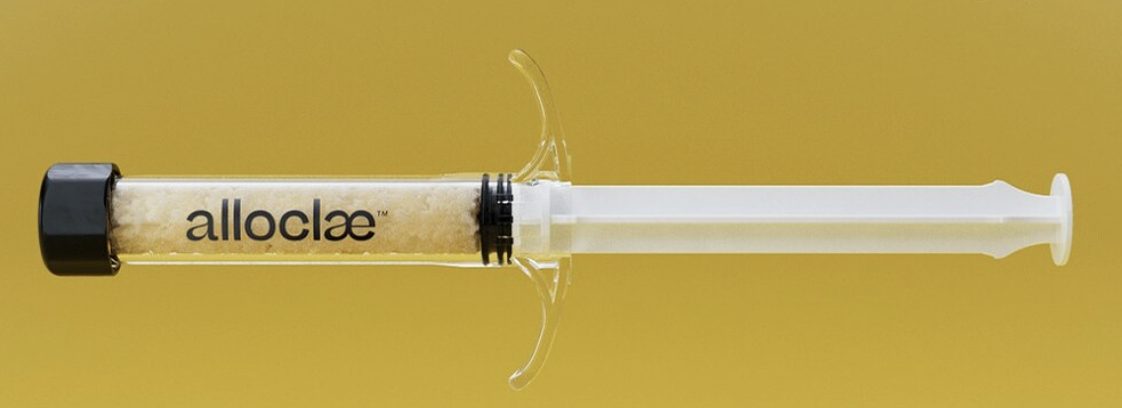
For decades, the rule of fat transfer was simple: you need donor fat to move fat. That rule excluded some of the patients who wanted contour refinement most — lean and athletic patients with nothing to harvest, women wanting subtle restoration after implant removal, and patients whose GLP-1 weight loss left hollows and irregularities but little spare fat anywhere. AlloClae changes that equation. It is a structural adipose filler: purified, sterilized donor fat matrix, ready to inject in an office visit — no liposuction, no donor site, no operating room.
Dr. Rafizadeh has performed autologous fat grafting in Morristown for decades, and he evaluates AlloClae the way he evaluates every new tool: honestly. It does not replace fat transfer when meaningful volume is the goal and donor fat exists. What it does is open the door for patients who previously had no good option — and refine contours that used to require a second surgery.
What AlloClae Is — and How It Works
AlloClae is made from donor human adipose tissue, screened to FDA donor-eligibility standards and processed through a multi-step method that removes cells and immunogenic components. What remains is the extracellular matrix — the collagen, elastin, and structural proteins that give soft tissue its architecture — along with naturally occurring growth factors. Regulated as a human tissue product, it arrives sterile in ready-to-use syringes.
Injected beneath the skin with a blunt cannula, the matrix acts as a scaffold: your own cells migrate in, new collagen forms, and over three to six months the material integrates into your tissue. The result is volume that looks and feels like you — because increasingly, it is you. Published studies of allograft adipose matrices have documented this remodeling into healthy, vascularized tissue.
Who AlloClae Serves Best
Lean & Athletic Patients
Bodybuilders, weightlifters, runners, and naturally lean patients are routinely told they “don’t have enough fat” for grafting. With AlloClae, body-fat percentage is irrelevant — hip dips, contour deficits, and small hollows can be treated with donor matrix instead of a harvest you can’t spare.
After GLP-1 Weight Loss
Ozempic, Wegovy, and Mounjaro strip fat quickly — and not always evenly. Deflation hollows, liposuction-style irregularities, and depressions can remain after major weight loss, often with too little residual fat to graft. AlloClae smooths and restores these contour deficits in an office visit.
After Breast Implant Removal
Following explant, many women want modest upper-pole softening or smoothing of rippling and step-offs — without new implants and without surgery. AlloClae offers a no-liposuction path to refinement, alone or alongside fat transfer or a lift.
AlloClae vs. Fat Transfer vs. Fillers
| AlloClae | Fat Transfer | HA Fillers | |
|---|---|---|---|
| Source | Purified donor adipose matrix | Your own fat, harvested by liposuction | Synthetic hyaluronic acid gel |
| Liposuction needed | No | Yes | No |
| Setting | Office, local anesthesia | Operating room | Office |
| Best for | Modest volume & contour refinement when donor fat is scarce | Larger volume when donor fat exists | Small facial volumes; temporary |
| Longevity | 12–18+ months as tissue integrates; touch-ups maintain | Long-lasting for fat that survives (60–80%) | 6–18 months |
What to Expect at Your Visit
Treatment takes roughly 30–90 minutes in the office under local anesthesia. Dr. Rafizadeh marks the treatment plan standing, injects the matrix in layers with a blunt cannula, and contours by hand. Most patients return to normal activities within two to three days; strenuous exercise and direct pressure on the treated area are limited for two to three weeks. Initial volume is visible immediately, with the final integrated result emerging over three to six months.
→ See Real Patient ResultsBrowse before & after cases from Dr. Rafizadeh’s 40+ years of breast and body contouring in Morristown.“AlloClae is a tool, not a miracle. It will not replace an implant, a lift, or a real fat transfer when those are what your anatomy calls for. But for the lean patient with nothing to harvest, or the explant patient who wants refinement without another surgery, it fills a gap we simply could not fill before.”
— Dr. Farhad Rafizadeh, MD FACS
Honest Limitations
AlloClae is best for modest, targeted volume — think refinement, smoothing, and small hollows rather than dramatic augmentation. In the breast, that means up to roughly half a cup of subtle enhancement or post-explant smoothing, not an implant-scale change. Results are long-lasting but not permanent: some of the matrix is remodeled over 12–24 months, and touch-up sessions maintain the result. Larger deficits are usually still better served by fat transfer, an implant, or an excisional procedure — and Dr. Rafizadeh will tell you which, plainly, at consultation.
→ Considering Breast Implant Removal?Explant surgery, capsulectomy, and the honest options for your shape afterward — including AlloClae refinement. → Planning Post-Weight-Loss Contouring?After GLP-1 or bariatric weight loss, see how AlloClae fits alongside skin removal and surgical contouring in a staged plan.Sources & References
- U.S. Food & Drug Administration. “Tissue & Tissue Products” (Human Cells, Tissues, and Cellular and Tissue-Based Products regulation). fda.gov
- Kokai LE, et al. “Injectable Allograft Adipose Matrix Supports Adipogenic Tissue Remodeling in the Nude Mouse and Human.” Plastic and Reconstructive Surgery. 2019;143(2):299e–309e. PubMed
- Gold MH, et al. “A multi-center, open-label, pilot study of allograft adipose matrix for the correction of atrophic temples.” Journal of Cosmetic Dermatology. 2020;19(5):1044–1056. PubMed
- American Association of Tissue Banks. Standards for Tissue Banking — donor screening and processing. aatb.org
- American Society of Plastic Surgeons. “Fat Transfer / Fat Grafting.” plasticsurgery.org