
One of the most frequently repeated questions Dr. Farhad Rafizadeh receives in his Morristown consultation room — and a recurring theme on his RealSelf Q&A page — comes from women who had a breast augmentation years ago and want to know whether the clock is running out on their implants.
“I had my breast implants put in over 10 years ago and they still look and feel fine. My friends keep telling me I need to replace them. Is that really true, and how do I know when it’s actually time?”
This question shows up in some form every week. The pressure to “replace at 10 years” comes from a mix of old FDA study language, manufacturer warranty marketing, and well-meaning friends. The honest clinical answer is more nuanced, and for North Jersey patients researching breast augmentation or revision, it deserves a clear explanation.
Dr. Rafizadeh’s Short Answer
Modern breast implants are not on a fixed expiration date. Most last 10 to 20 years, and many patients keep them longer than that without any problem. We do not replace healthy implants in healthy patients just because a calendar says we should. What we do is monitor for the specific signs — firmness, pain, change in shape, rupture on imaging — that actually warrant a revision. Safety, not marketing, drives that decision.
That answer reflects a philosophy Dr. Rafizadeh has carried since he introduced the Ideal Implant to Northern New Jersey: every implant decision should be made for a biological reason, not a calendar reason. The same logic applies to implants the patient already has.
What Modern Implants Are Actually Designed For
Breast implants in 2026 are several generations beyond the early devices that gave rise to the “10-year rule.” Both saline implants and cohesive silicone gel implants — the two FDA-approved categories used in U.S. practice — are engineered for durability measured in decades, not years. Manufacturers test the shells under cyclic loading equivalent to many years of daily wear before they ever reach the market.
What this means in practice: a modern implant placed by a board-certified plastic surgeon, in a healthy patient, with a clean surgical pocket, has a realistic functional lifespan that overlaps with the patient’s remaining lifetime in many cases. The complications that do drive revision are not implant “wear” in the mechanical sense — they are biological events that happen to the body around the implant.
Where the “10-Year Rule” Actually Came From
The persistent “replace every 10 years” idea has two sources, both of them misread over time:
- Early FDA post-market studies tracked silicone implant patients out to roughly 10 years and reported a measurable cumulative rate of rupture, capsular contracture, and reoperation by that mark. That data was important — but it was about cumulative risk, not a recommended replacement schedule.
- Manufacturer warranties generally provide free implant replacement (and a contribution toward surgical costs) for ruptures occurring within the first 10 years. That created the impression that the warranty period was an expiration date. It was not.
The American Society of Plastic Surgeons (ASPS) has been explicit on this point in their patient education materials: implants do not have to be replaced every 10 years if there is no problem. The correct interpretation of the 10-year mark is that monitoring becomes more important, not that surgery becomes mandatory.
The Signs That Actually Warrant a Revision
Dr. Rafizadeh tells his Morristown patients to pay attention to specific changes rather than to dates. The signals that should bring you in for an evaluation:
1. New Firmness or Hardening (Capsular Contracture)
Every breast implant develops a thin scar capsule around it as part of normal healing. In a minority of patients, that capsule thickens and tightens over time, distorting the shape and sometimes causing discomfort. This is capsular contracture, graded I through IV (the Baker scale). Grades III and IV are typically treated with capsulectomy — removal or modification of the capsule — often combined with implant exchange. This is one of the most common reasons for breast implant revision in Northern New Jersey.
2. Visible Change in Shape, Position, or Symmetry
An implant that has rotated, dropped (“bottoming out”), migrated to the side, or pulled an entire breast out of position is a mechanical problem that won’t self-correct. The same is true of new asymmetry where there wasn’t any before. None of these is dangerous in the immediate sense, but each is a sound reason to discuss revision.
3. Sudden Deflation (Saline Rupture)
If you have saline implants and one of them ruptures, you will know. The saline is absorbed harmlessly by the body, but the breast visibly deflates over hours to a few days. The shell still has to be removed, and the implant replaced if you want to maintain volume.
4. Silent Rupture (Silicone Implants)
Cohesive silicone gel implants can rupture without changing the look or feel of the breast — a so-called “silent rupture.” The thick gel stays largely contained inside the scar capsule. The only way to catch it reliably is with imaging. For this reason, the FDA recommends an MRI or ultrasound of silicone implants beginning around 5 to 6 years after placement, then every 2 to 3 years thereafter. North Jersey patients can have this imaging done locally through any of the major imaging centers in Morristown, Summit, Madison, and Livingston.
5. New, Persistent Pain or Discomfort
New chest, shoulder, or breast pain that wasn’t there before, doesn’t fit a clear musculoskeletal cause, and persists beyond a few weeks deserves an evaluation. Pain is not a reliable early sign of rupture by itself, but it is a reliable sign that something has changed in or around the implant pocket.
6. Rippling, Wrinkling, or Visible Implant Edges
Some thin or weight-loss patients have always seen mild rippling at the bottom or side of the implant; that’s a baseline finding. New rippling or newly visible edges, particularly in a patient who didn’t have them before, typically reflects thinning of the overlying tissue, implant deflation, or capsular changes — all worth examining.
7. Symptoms Some Patients Attribute to Breast Implant Illness
A subset of patients reports systemic symptoms — fatigue, joint pain, brain fog, rashes — that they associate with their implants. The medical literature on Breast Implant Illness (BII) is still evolving, and the symptom pattern is non-specific. Dr. Rafizadeh takes these concerns seriously, evaluates each patient individually, and offers explantation with or without capsulectomy when appropriate. Related reading: his discussion of Anaplastic Large Cell Lymphoma (ALCL) and breast implants, which addresses a separate but related implant-safety topic.
What Pregnancy, Weight Change, and Aging Do to the Picture
One of the most common reasons North Jersey women in their late 30s and 40s come back for a revision has nothing to do with the implant itself. It has to do with the breast tissue around it.
During pregnancy and breastfeeding, glandular tissue enlarges and then often shrinks below its starting baseline. Weight loss does the same. Aging adds skin laxity. The implant is still intact, but the soft tissue envelope around it has changed — less upper-pole fullness, lower nipple position, and a deflated appearance to the upper part of the breast. In these cases the right operation is usually a breast lift with or without implant exchange — not a simple swap of like-for-like implants.
The reverse can also happen: a patient may want to come back smaller after years with larger implants, often after weight changes or shifts in aesthetic preference. Revision lets us reset the size while addressing any soft tissue issues at the same time.
Imaging: How We Actually Monitor Implants Over Time
For silicone gel implants, the FDA-recommended monitoring schedule is the most concrete answer to “how do I know?”:
- Year 5–6 after placement: first MRI or ultrasound screening.
- Every 2–3 years thereafter: follow-up MRI or ultrasound.
- Any time symptoms appear: imaging on demand, not on schedule.
For saline implants, routine imaging is not required because a rupture is visible and obvious. Annual physical evaluation is still appropriate.
For all implants, the standard breast cancer screening guidelines from your primary care provider or breast surgeon still apply, with the addition that mammograms in implant patients should be performed at a center experienced with the implant-displacement (Eklund) views. For background on imaging considerations, see Dr. Rafizadeh’s earlier post on whether MRI is necessary after silicone breast implantation.
What a Revision Operation Actually Involves
Breast implant revision is a broader category than “take the old one out, put a new one in.” The plan is built around what the examination and imaging actually show. Common revision configurations Dr. Rafizadeh performs in Morristown include:
- Simple implant exchange: remove the old implant, leave or refresh the capsule, place a new implant. Reasonable when the implant is the only issue.
- Implant exchange with capsulectomy: remove the implant and the surrounding capsule, then place a new implant. Indicated when there is contracture, rupture with silicone in the capsule, or BII symptoms.
- Implant exchange with breast lift: revise the implant and reposition the breast tissue at the same time. The right call when soft tissue laxity is part of the problem. See his post on breast lift and implant exchange in one stage in Morristown.
- Explantation (with or without lift): remove the implants entirely without replacement, typically combined with a lift to address loose skin.
- Conversion to a different implant type or size: for instance, exchanging older silicone for an Ideal Implant, or going down in size after weight loss.
What This Looks Like in Real Patients
The two breast augmentation results below were both performed by Dr. Rafizadeh in Morristown. Patients who pursue revision later in life are aiming for the same essentials: natural shape, symmetry, and a result that ages well over time.
Patient Before & After
View Full Gallery →
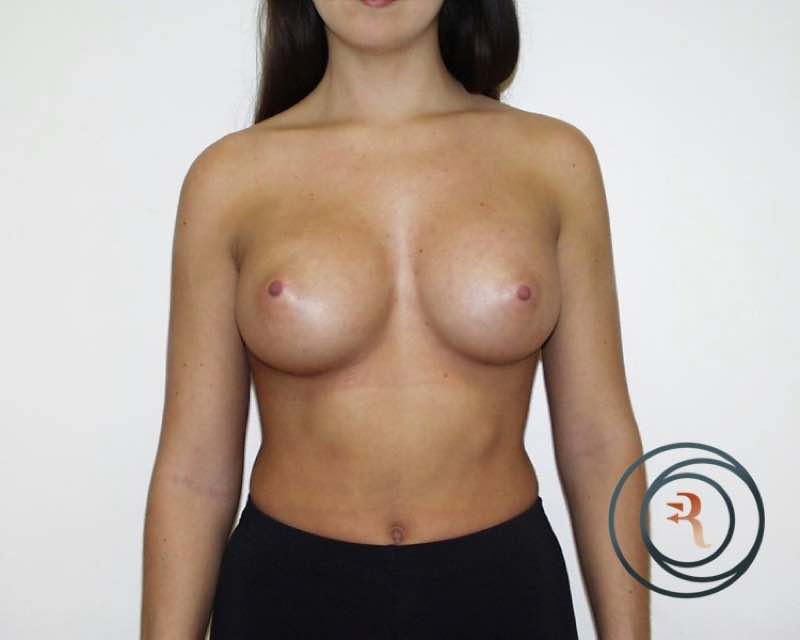
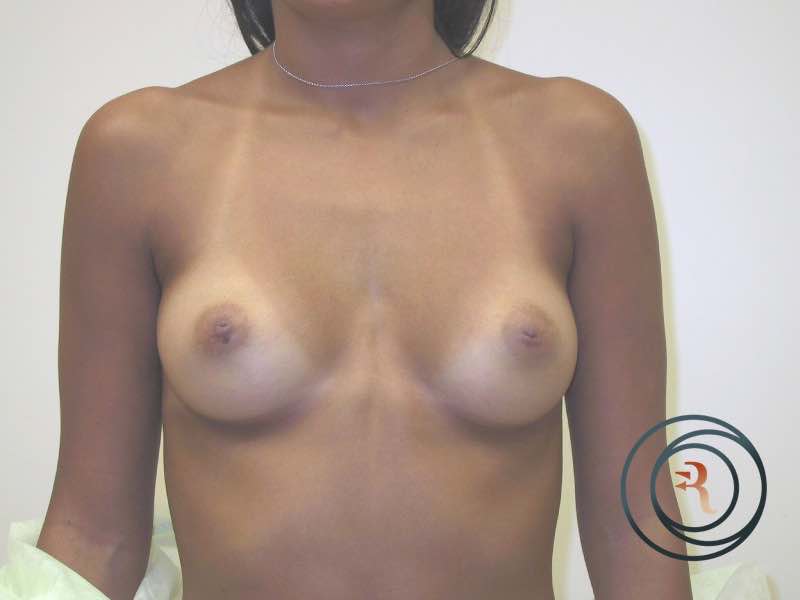
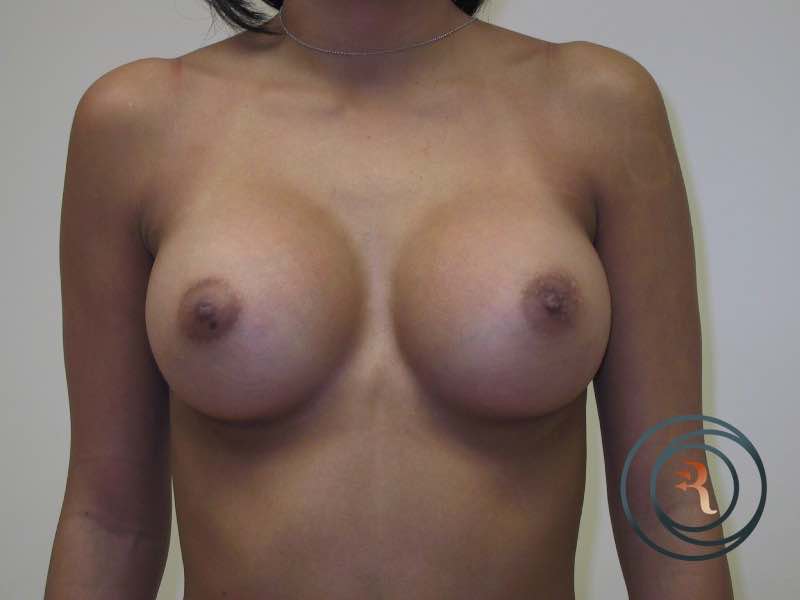
Implants chosen for natural proportion and a clean, well-supported pocket tend to age well. Both patients above retained natural shape and symmetry through the follow-up window — the kind of long-term stability that makes the “replace every 10 years” concern less relevant.
What North Jersey Patients Should Actually Do
If you have breast implants and are wondering whether you should be acting on them, the practical answer for a Morristown, Summit, Chatham, Madison, Short Hills, Bernardsville, or greater Northern New Jersey patient is:
- If your implants are under 5 years old and asymptomatic: annual self-exam and your normal breast care. No imaging specifically for the implants is required.
- If your implants are 5–10 years old: schedule the FDA-recommended MRI or ultrasound for silicone implants. Mention the implants at every routine breast exam.
- If your implants are over 10 years old and asymptomatic: continue imaging on the every-2-to-3-year schedule. Consider a baseline consultation with a board-certified plastic surgeon so there is a documented exam on file in case anything changes.
- If you have any new symptom — firmness, pain, shape change, rippling, deflation, systemic symptoms — book an evaluation. Do not wait for the next imaging date.
- If you are simply tired of your implants or your aesthetic preferences have changed: explantation, downsize, or lift-and-exchange are all reasonable options that can be discussed at consultation.
Questions to Ask Any Plastic Surgeon About Implant Revision in North Jersey
If you are interviewing surgeons in Morristown, Summit, Chatham, Madison, Short Hills, or anywhere across Northern New Jersey for a possible revision, useful questions include:
- How many breast implant revision and explantation cases do you personally perform each year?
- What is your approach to capsulectomy — partial, total, or en bloc — and how do you decide?
- Do you have imaging on file, or do I need to bring my MRI or ultrasound from another facility?
- What is your honest opinion on whether I need to do anything at all right now?
- If I want to remove my implants entirely, what will my breasts look like — and will I need a lift at the same time?
- What is the facility, the anesthesia plan, and the recovery profile for the operation you’re recommending?
A surgeon who has spent decades doing primary augmentation, exchange, and explantation will answer all of these in concrete, specific terms — and will not push you toward an operation you don’t need.
Common Questions Patients Search About Breast Implant Lifespan & Replacement
Do breast implants need to be replaced every 10 years?
No. The ‘every 10 years’ rule is a myth rooted in early FDA studies and manufacturer warranty language, not in a biological requirement. If your breasts look and feel normal, your imaging is reassuring, and you have no symptoms, there is no reason to operate on a healthy implant. Dr. Rafizadeh’s North Jersey patients are monitored with imaging on the FDA schedule and operated on only when there is an actual indication.
How do I know when my breast implants need replacing?
Pay attention to specific signs: new firmness or hardening of the breast (capsular contracture), visible change in shape or position, sudden deflation (saline rupture), persistent new pain, rippling that wasn’t there before, asymmetry, or a finding on a routine MRI or ultrasound. Any of these — particularly in an implant older than 10 years — deserves an evaluation by a board-certified plastic surgeon.
What happens after 20 years of breast implants?
By the 20-year mark, the cumulative risk of capsular contracture, rupture, malposition, or breast tissue change is high enough that most patients have either had a revision or are reasonable candidates for one. That said, some North Jersey patients reach 20 to 25 years with intact, comfortable, well-positioned implants. The right answer is individual and is driven by examination and imaging, not by the calendar.
What is the 45–55 rule for breasts?
‘45–55’ is a popular online phrase referring to the age range in which many patients with implants placed in their 20s or 30s begin thinking about revision, exchange, or removal. It is not a medical rule. It reflects the reality that 15 to 25 years after a primary augmentation, the implants are usually still functional but breast tissue, skin elasticity, and the patient’s aesthetic preferences have changed enough to make an honest revision conversation worthwhile.
What is the longest you can keep breast implants?
There is no universal upper limit. Many patients carry their implants for 20 to 30 years without problems, and some carry them for life. The functional lifespan depends on the implant generation, the surgical pocket, the patient’s body changes over time, and luck. As long as the implants are asymptomatic and imaging is reassuring, there is no maximum date at which they must come out.
What happens if you don’t change your breast implants in 10 years?
If the implants are stable, comfortable, and your imaging is normal, nothing has to change. The 10-year date is a monitoring milestone, not a deadline. What you should not do is ignore a known problem — particularly a confirmed silicone rupture or significant capsular contracture — for years. Leaving those untreated leads to silicone migration outside the capsule, progressive distortion, and a more complex revision later.
How do you know if your breast implants are failing? (silent rupture)
A modern cohesive silicone gel implant can rupture without any visible change — a so-called silent rupture. The thick gel stays largely contained inside the scar capsule, so the breast often still looks and feels normal. The only reliable way to detect it is imaging, which is why the FDA recommends MRI or ultrasound beginning around 5 to 6 years after placement and every 2 to 3 years thereafter for patients with silicone implants.
Related Reading From Dr. Rafizadeh’s Blog
North Jersey patients researching breast implants, replacement, or revision may find these articles useful:
- What Is the Best Breast Implant for You?
- The Ideal Implant in Morristown — Why Dr. Rafizadeh Introduced It to North Jersey
- Choosing Between Silicone and Saline Breast Implants
- Silicone Gel vs. Saline Breast Implants — My Experience
- Is MRI Necessary After Silicone Breast Implantation?
- Breast Lift and Implant Exchange in One Stage in Morristown
- ALCL Associated With Breast Implants Explained
- Smooth vs. Textured Breast Implants — A Morristown Perspective
Bottom Line
Modern breast implants do not expire on a calendar. Most last 10 to 20 years, and many last longer. The right question is not “has it been 10 years?” but rather “has anything actually changed?” If your imaging is clean and your exam is normal, there is no need to operate on a healthy implant. If something has changed — firmness, pain, shape, position, rupture on imaging, or simply a change in what you want from your breasts — the right next step is an evaluation with a board-certified plastic surgeon who can lay out every option honestly, from monitoring to revision to explantation.
If you have breast implants and want a thoughtful, no-pressure evaluation in Morristown, Summit, Chatham, Madison, Short Hills, or anywhere across Northern New Jersey, Dr. Rafizadeh is happy to review your imaging, examine the implants, and walk you through what your specific options look like — including the option to leave well enough alone.
Sources & Further Reading
- U.S. Food and Drug Administration. “Risks and Complications of Breast Implants.” FDA Medical Devices, 2023. — the FDA’s primary patient guidance on rupture, capsular contracture, BIA-ALCL, and recommended MRI / ultrasound screening intervals for silicone gel implants.
- U.S. Food and Drug Administration. “Breast Implants — Information for Patients and Providers.” FDA, 2024. — updated boxed-warning labeling and the official monitoring schedule (initial MRI/ultrasound at 5–6 years, every 2–3 years thereafter).
- American Society of Plastic Surgeons. “Do I need to change my breast implants every 10 years?” ASPS Patient Education. — ASPS’s explicit position that healthy implants do not require routine 10-year replacement.
- American Society of Plastic Surgeons. “Seven signs you need a breast implant revision.” ASPS Patient Education, 2022. — the standard clinical signs (rupture, contracture, malposition, rippling, pain) that warrant revision evaluation.
- American Society of Plastic Surgeons. “Will your breast implants last a lifetime?” ASPS Patient Education, 2021. — ASPS overview of average implant lifespan (10–20 years) and the biologic reasons for replacement.
- Cleveland Clinic. “Breast Implant Removal: What to Expect, Surgery & Recovery.” Cleveland Clinic Health Library. — explantation indications, technique, and recovery expectations.
- Hammond DC, Migliori MM, Caplin DA, et al. “Mentor Contour Profile Gel implants: clinical outcomes at 6 years.” Plast Reconstr Surg. 2012;129(6):1381–1391. — long-term post-market data on cohesive silicone gel rupture rates.
- Spear SL, Murphy DK; Allergan Silicone Breast Implant U.S. Core Clinical Study Group. “Natrelle round silicone breast implants: Core Study results at 10 years.” Plast Reconstr Surg. 2014;133(6):1354–1361. — pivotal 10-year rupture and reoperation data that anchor the modern lifespan estimates.
- Spear SL, Baker JL Jr. “Classification of capsular contracture after prosthetic breast reconstruction.” Plast Reconstr Surg. 1995;96(5):1119–1123. — the modernized Baker scale (I–IV) used to grade capsular contracture and to decide when revision is indicated.
- U.S. Food and Drug Administration. “Breast Implant Illness (BII).” FDA, 2023. — FDA summary of reported BII symptom patterns and explantation considerations.
Ready to schedule a consultation in Morristown, NJ?
Book a Consultation